Sunday, December 3, 2017

lady bird (2017)

I feel a lot of pressure writing this review, given that this movie has been touted somehow as the most highly reviewed movie on Rotten Tomatoes to date, but I tried not to read any reviews before writing this so as not to be swayed by the masses. On the whole, if you like quirky, fast-paced dialogue, the aesthetics of teenage rebellion, and moving scenes between a daughter and her mother who are both products of trauma suffered by their own mothers, you're sure to appreciate this film!

One of the most moving scenes for me was when Ladybird's mother finds out that she had applied to a school in New York behind her mother's back, and Ladybird is trying desperately to convince her mother that it'll be financially manageable while begging for her forgiveness, while her mother silently washes the dishes. It’s like one of those nightmares in which you’re desperately screaming at your parents because they won't listen and they don't hear you or react at all. I had one of these dreams the night before I watched this movie, which is why this scene really got to me! Being ignored by a parent who otherwise micromanages you is so traumatizing, and I think the scene captured that feeling so well.

prom dress shopping, literally the worst!!!
I also wanted to think a little more about the name Ladybird, which the main character gives herself and prefers to the name Christine, given to her by her mother. First of all, apparently British people call ladybugs ladybirds! Who knew?? Also, the image above of Ladybird in a flaming red-orange dress, with her feathery hair and faded red highlights, immediately brought to my mind the Firebird from Slavic folklore, whose feathers glow a fiery red and brings both great fortune and doom to its captor. I presume this mythical creature was popularized in Western culture by Stravinsky's Firebird Suite in Disney's Fantasia 2000 (a guess idk), in which a powerful bird spirit is awakened and consumes the surrounding forest and land in flames. This combination of awe-inspiring greatness and destruction fits nicely within a coming of age story, as we all know growing up comes with not only the beauty of new experiences and forming one's identity, but also inevitably fucking up a LOT during that process. For our movie protagonist, "Ladybird" is a self-made identity to wear and grow into, a way to hide from her mother in the only way she can. It's an identity is boldly claimed and that can be, depending on her audience, alienating or inviting in its irreverence. (Shout out to this great line: "If you took up-close shots of my vagina when I'm on my period, it'd look pretty disturbing, but that doesn't make it wrong.")

There were a lot of interesting character stories going on in this movie beyond Ladybird and her mother - her father is depressed but doesn't ever show it, her first boyfriend is gay and afraid to tell anyone, her best friend has anxiety about her weight that Ladybird is oblivious and insensitive to, her brother is clearly adopted given she and her parents are white af and his girlfriend lives with them because she got kicked out of her own family. There is so much to explore in these characters' lives and I was left wanting more of their story through their interactions with Ladybird. I admit, it would have been ambitious to flesh out all of these characters, but it would have been nice. It also might have made up for the fact that only non-white people in the movie serve as caricatures onto which Ladybird deploys her irreverence (e.g. copying answers off of an Asian girl in math class, having her brother and his gf portrayed as social weirdos who will "never get jobs" because of their facial piercings). Yeah, this movie was super white which is disappointing and made it hard to relate to. I definitely think it's about time that there's a well-received live-action coming of age story with a female protagonist (directed by a woman nonetheless), but America u still so white. Who run the 21st century? White feminists!!!

I also wish the movie had a slower pace to it, or perhaps had a little more quietness infused into it. The heavily stylized dialogue was funny but felt superficial at times, and I felt myself wanting more silences. So to sum it up, far from perfect IMO but I enjoyed it and appreciate the film for what it is. Perhaps the fact that it gave me a lot of different feelings is testament enough!

Saturday, December 2, 2017

coco (2017)

Coco is a heartwarming story about love for family and following your dreams all wrapped up in one delightful story set in Mexico, featuring an all-Latinx cast. Am I dreaming? No, this is real life and it's amazing!!! It's incredibly uplifting to see major film companies like Pixar and Disney diversifying their movies, and it's no surprise that they tend to be my favorites. It was only starting a few years ago that these major movie companies began telling stories about ~strong female characters~ (I promise this is relevant), and for years I would burst into tears when I saw them on screen because it was just felt so new and unbelievable. I felt my heart aching in a similar way during this movie, as I watched people of color being celebrated so lovingly on the big screen.

QTpie wants to be a musician so precious

Beautiful visuals with an ambitious storyline that was pulled off quite nicely. I cried like a baby and it felt great. Would watch again because I want to see it in 3D!

right now, wrong then (2015)

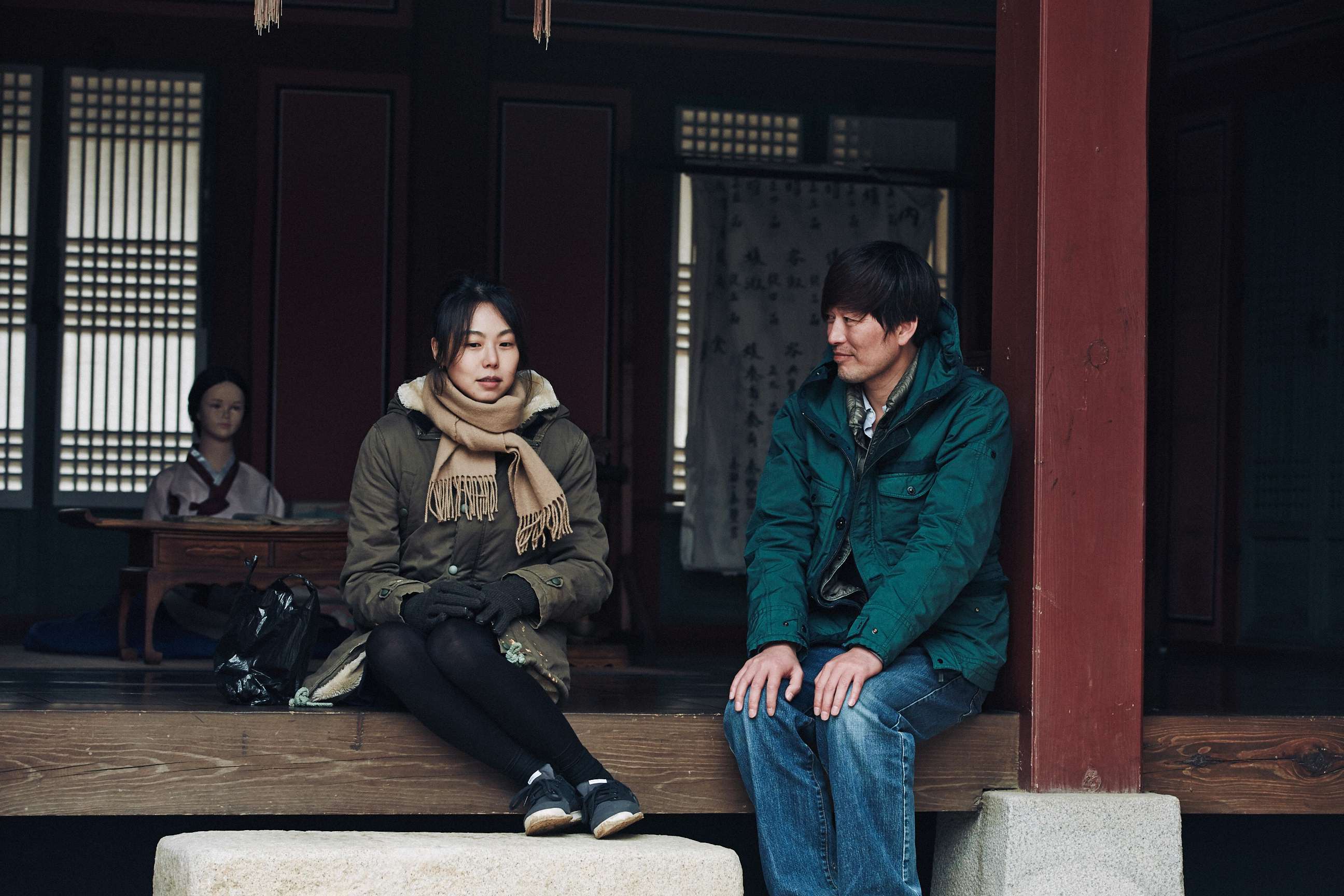
To watch Right Now, Wrong Then is to dive into and swim around in its quiet realism. Long, still shots in which the camera barely moves render you a voyeur, invisibly and patiently observing the incidental meeting of two strangers. The acting is superb, which is what makes it so fascinating to watch the characters gradually open up right in front of you. I was already Kim Minhee's biggest fan (she was in The Handmaiden my favorite movie!!), but to see such a skilled performance from her made me fall in love with her all over again.

awkward turtles

I can't talk about this film without talking about the trick it employs halfway through - it rewinds to the beginning and the characters make different decisions as they go through the same plot points. Namely, in the second half Director Ham approaches Heejung in a way that is more honest and transparent, which allows her the space to be more of herself in return. Their short relationship is tweaked in subtle ways that build upon each other, culminating in an ending in which nothing has changed -- they still go their separate ways -- except for the way they feel about each other. 

I can think of so many productions that employ this rewind-and-go-again format (Tatami Galaxy, the play Constellations, Groundhog Day...) and it's easy to see what is so compelling. The format allows us to live out the alternative universes in which all but the factor you choose are held constant. It's like conducting a science experiment. What went wrong the first time? What could have been? A fantasy, observed from a safe distance. 

Of course, though the second version of the story gives us the sense of wish fulfillment for both characters, the encounter isn't perfect. It's nice that Director Ham is honest about the fact that he is married, but given that the current story is happening I would surmise his marriage has some serious issues! He also criticizes Heejung's painting and upsets her, and repeatedly tells her she is pretty without even invitation. Despite being overall more likeable in the second half, he is masculine and patronizing in the way he talks to her, unable to shake the arrogance that plagues him as a famous movie director and as a man. To see the "better" half of the story fall far from perfect is perhaps a comfort to those of us who are regretful or hung up on the past, or a warning to those who think that life is anything but messy. (To make matters worse, the director of the actual movie had an affair with Kim Minhee what the fuck!!? Was this whole project just a way for him to live out his own fantasy of taking advantage of a young beautiful actress with whom he would have no chance with without the power differential this project provides him??? Was the whole plot to like psychologically prime her to fall in love with him?? I am as always highly skeptical of powerful men's motivations but idk though I don't want to deny Kim Minhee any agency. Also I just google'd this and apparently they are in love. Omg. Ugh ok let's make a futile attempt to separate the art from the artist starting..... now... ... .. . )

Overall, this movie is a lovely meditation on human interaction and all of the beauty and shared connection and pain and disgust that comes with it. Looking forward to watching the director's new movie coming out this month, On the Beach at Night Alone, ALSO starring Kim Minhee, ALSO about her falling in love with a movie director. *facepalm*

Wednesday, November 8, 2017

thirst / bakjwi (2009)

If you're looking for a fun, sufficiently creepy movie, this is the one to watch! And it's not just any ol' vampire movie - it's about a priest who turns into a vampire after a blood transfusion gone awry (I hope nothing like this happens on my clinical service ha ha ha!), and the havoc that follows as he tries to stay true to his principles.

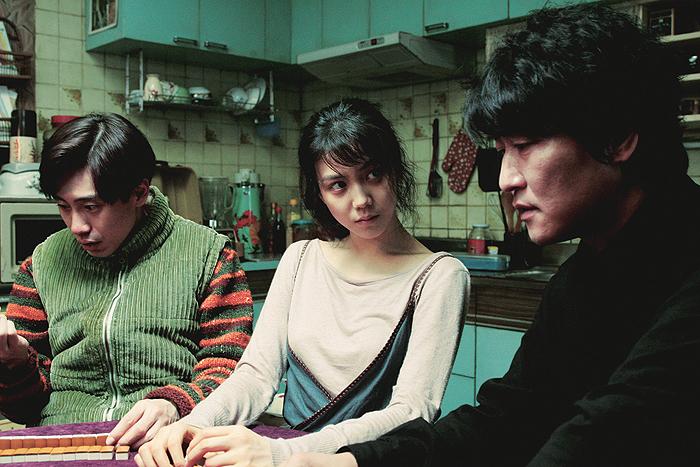
~ suggestive stares ~

Of course, he is able to generally control himself until he meets the woman who screws everything up. Women suck amirite??!!! She's lonely and mistreated as essentially a servant in her own household, so when protag shows up she seduces him. She is successful partly due to her high JVP and because as a priest he is horny af and understandably #downforwhatever. Lots of sexual interactions take place, most of which I found pretty cray, and one of which I found pretty hot?? It's interesting to think about the conflation of thirst for blood (aptly called bloodlust) with sexual desire in the vampire genre. It makes sense because I guess bodily fluids, necks, and gloomy men who tend to be vampires are all sexy in the cultural imagination - but I am also reminded of the conflation of violence and sex in ways that hurt people in catastrophic ways every day.

It's a Park Chan Wook movie, so of course it's filled with cool shots and startling moments and great acting. Of course, the female protag is a - do I even have to say it - literal piece of cute cardboard whose decisions don't make sense but like what's new?? Oh, and fun fact: The Korean title for this movie is bakjwi, literally "bat." I guess it was decided that that wasn't appealing enough for us sex-crazed Americans. Anyway, this film is overall a fun watch if you have a thing for vampires and mild gore like I do!

oldboy (2003)

// second viewing //

I remember being nineteen years old and watching this movie for the first time and being captivated by the unraveling mystery, the protag's pain and all-consuming drive for vengeance, and the extravagant presence of violence and profanity throughout. Now, five years later, I found my second viewing sorely disappointing. Without the shock factor of the plot, the dullness of the characters became more apparent - the female love interest is reduced to an object of sex and violence and also conveniently a plot point, and the antagonist is reduced to just an inexplicably shitty person, though he had a backstory that could have made him much more compelling if only his psychological had been explored a little more deeply.

On the whole I find the general scheme of vengeance stories to be a giant yawn. Character A shits on character B, who gets mad and spends the whole movie plotting to shit back on character A. It's like 2 Girls 1 Cup but the shit is all figurative. Character B has questionably consensual sex with a woman thirty years younger than he is. (I wonder if the movie was trying to make a point about this?) Sprinkle on some violent obstacles, finish the plot off with a twist, and you get a movie that film bros can really jerk off to enjoy.

meet-cute at the sushi bar

Is that all I have to say? I think that's all I have to say without spoiling anything since spoiling this movie would defeat the purpose of anyone watching it IMO. The acting was good! The camerawork and composition were good. The pacing of the first part of the movie where he's imprisoned in a room was great. And the octopus scene!!! I've been craving live octopus since I watched this movie five years ago and that desire has not changed one bit!

I hope I didn't hurt your feelings, Park Chan Wook. :( I still think The Handmaiden is a masterpiece and it's still one of my favorite movies, but that's probably because you had a female co-writer and her lesbian friend as a consult who probably did the heavy lifting in humanizing your characters. I hope you learned something and I look forward to your next movie! Hwaiting!!!

Sunday, November 5, 2017

battle royale (2000)

A class of teenagers are brought to a remote island under the guise of a class trip and forced to kill each other off until one remains. It's a brutal setup that's been a part of our cultural imagination, taking on many forms from Robinson Crusoe which I never read, to The Hunger Games trilogy which I ashamedly took part in. There was something about this film in particular that felt more succinct and distilled, a specific meditation on what it is like to be confronted by the idea of the death of others as an antidote to your own death. The characters were all interesting and engaging to watch, with their own unique motives and ways of coping, which was great, and the fact that they were kids made their acts of passion more believable. Of course, the female love interest was mostly a shell of a human being and served only to give emotional support to other men, but hey, just like prostitution is the world's oldest profession, so are cardboard female love interests the movie industry's oldest unhealing leg ulcer!!!

The pacing was fast, which I liked - we're told in stark text that the country is falling apart, that adolescents are boycotting school and youth crime is on the rise. In reaction, the "adults" pass the BR Act (Battle Royale) that allows for the premise of the movie. We're not told why or who in the world thought this was a good idea, which is perhaps comforting because it allows us to momentarily laugh at how preposterous and fictitious the premise is - that is, until we remember that the world we live in is no different in how it pits individuals and groups of people against each other in order to maintain a certain power hierarchy.

#distressed

Stylistically, I loved the white text on a black screen that would immediately appear after each death, showing the name and assigned number of the character that had died as if they were inevitable, each just one more number on a scoreboard displayed for the audience's benefit. Occasionally, during the deaths of more prominent characters, the camera would linger on their lifeless body and the text would appear right on top of that image, without the black background, forcing the audience to confront the gruesome fact of slaughter.

Overall this movie that does a great job rendering this kill or be killed narrative that we are so familiar with. It's immersive, and sweet and horrifying at once, though fairly easy to digest because the horror isn't anything new or backhanded. It's not unsettling to watch because they are children and perhaps we don't infuse within them any kind of lasciviousness or twisted deceit. They are simply trying, as we always are, when confronted with danger imposed by the existing world. 

Sunday, September 3, 2017

wolf children / ookami kodomo no ame to yuki (2013)

// second viewing //

Truly a masterpiece! This family saga tells the story of Hana, a woman who falls in love with a wolf-man and has two wolf-children, Yuki and Ame, whom she must raise to self-actualization as a single mother within the confines of a society that does not deal too kindly with the duality of their nature. Her struggle is set alongside the challenges Yuki and Ame face of growing up and longing for acceptance and a place of belonging, and the ways in which the three characters' stories interlace and come apart is heartbreaking, delivered as a slow, devastating unraveling throughout the film. I am left with the image of a tapestry, coming undone with the end of the thread being painstakingly woven back in between the fibers that remain, resulting in an imperfect kind of beauty.

#idyllicAFcountrylife #jkit'sactuallyalotofwork

I love stories about sibling relationships, and this story's older sister/younger brother sibling relationship hit me extremely close to home, and perhaps led me to look closer into their dynamic than the film really intended for. I see a lot of parallels between Yuki and Ame and my own sibling relationship - headstrong Yuki and bashful Ame as children, Yuki's desire to participate in the outside world and having to sacrifice not only her wolf identity, but also begrudgingly take on a female gender identity, in order to survive and fit in. Ame slowly turning inward and discovering that he prefers the forest, and easily finds himself master of that domain, a role that opens up to him without much resistance. Ame becoming stronger and overpowering his sister as they fight violently, unable to come to terms with the fact that they want different things. Yuki finding relief for the complexity of her wolf/human duality only in a boy, while Ame finds freedom by simply deciding to embrace his wolf side. Bold, adventurous Yuki growing into a young woman who is essentially saved by a boy, while quiet Ame retreats during a rainstorm into his own realm, leaving his mother chasing after him in tears. I see this trajectory of these characters' lives and am filled with sadness - by the burdens we place on our daughters and mothers, by the way parents hurt their children by loving them so hard, by the pain that children cause their parents simply because they need to find themselves. This hurt is so universal, and is conveyed by the film so sincerely.

While I doubt this admittedly somber interpretation is the exact one that the writers meant for me to come away with, I think it is a testament to the attention to detail that they placed on character building that makes the characters come to life and elicit a personalized understanding of their story from the viewer. For example, I read another review in which the author talks about being reminded of her experience growing up as an Asian American immigrant, constantly negotiating her place between two worlds, with her parents acting as a sort of balancing force that reminded her that perhaps it was possible to exist in two states at once. I wish the film had explored a bit more the pain that Yuki felt in having to conform to gender norms - my only disappointment. In any case, I imagine there are so many stories of people's lives that this film will resonate with in unexpected ways, and I find that incredibly uplifting.

"omiyage mitsu, tako mitsu!" *bawls like a baby*

I finished this film feeling like I've known these characters for a decade of their lives, which really only ever happens otherwise when I read a book. It was mesmerizing the ways in which time passing was depicted - by the changing flowers in the vase beside the father's picture, by delightful montages of Hana working so hard to build a new life and her kids growing up alongside her toil, and the stylish panning through the school hallways as Yuki and Ame move up one grade level at a time. And oh gosh, the beautiful soundtrack that carries this story along. This film cuts straight to the heart.

a silent voice / koe no katachi (2016)

PLOT: Schoolboy Ishida has a great life until Nishimiya shows up as a new student who is deaf. The ways in which he and different characters react to her deafness causes a social crisis among them, and as a result Ishida becomes a social outcast and Nishimiya transfers schools. Years later, Ishida learns sign language and finds Nishimiya and asks her to be friends, in order to make amends before planning to commit suicide. He finds, however, that the prospect of friendship gives him something to live for. Stuff happens that spans I think seven manga volumes and is all stuffed into a two hour film in a way that is super confusing and tbh kind of boring.

This is a film that had perhaps great intentions but fell exasperatingly short of them. The story with the topics of disability (deafness) and mental health (social ostracization and suicide), but ultimately, because the film tries to do so many things at once and ultimately fails in fleshing out its large character cast, these topics feel more like dramatizing plot points and are not given the attention to detail they deserve.


First, the positive: The romantic undertones in this movie were dealt with a very light touch, which I appreciated. The viewer got the sense that part of the reason Ueno participated in Nishimiya's bullying was that she had feelings for Ishida, and it was clear that this unrequited longing continued to factor into her character's actions five years later. This tension was conveyed without the writers having to spell it out explicitly. The female characters in general were portrayed in a surprisingly and relatively non-gendered way, which is a testament perhaps to the fact that Kyoto Animation was founded by a woman? Idk I just read that somewhere lol.

The negatives, and only the negatives that I have the energy to write about (there were a lot):

Nishimiya is portrayed very statically as a shy, deaf girl who always has a smile on her face, is very quick to say sorry, who just wants to be friends, who wants to be friends with our male protagonist Ishida despite him literally throwing a ball of dirt into her face and called her disgusting when they first met because he ~didn't know how to act upon his confused feelings about her deafness, he realizes years later, so he had decided to react in a most toxically masculine way~. Though we do see her exasperated side when she reciprocates Ishida's violence during their fight at school, she immediately accepts his request for friendship when they reunite five years later, for no reason other than I guess this is what a girl has to do in order to not piss off a guy and possibly give him a reason to blame her for his decision to commit suicide - but of course she has a character showed no sign of this kind of decision-making. Her niceness and ability to forgive Ishida is hailed as the reason he does not go through with his suicide, but her character is in turn given no depth whatsoever. Her deafness is simply a device that lays a path for Ishida to make terrible decisions and then feel bad about them and try to make up for them, while all along she is blindly supportive and uncritical of him. She is, both literally and figuratively, a voiceless victim through which our protag is able to find self-actualization without having to be critical of his process. It's like they didn't even try!

I hope you get better portrayals in future films about deafness my cute honeypie *squishes cheeks bc you're cute but also bc this film convinces me you're just an object :( *

Ishida is quite frankly an idiot who has no social skills, which I guess makes sense because apparently he doesn't even need them because the other characters like him for no apparent reason. He is a flawed character who I imagine garners more sympathy in the manga, in which there is probably room for his character's internal life to be explored more fully. I found him unfathomably thoughtless and lame. There is probably no character trope I loathe more than the male protagonist who is supposed to be heroic simply because he realizes his mistakes and tries to fix them but nonetheless continues to make similar mistakes without consequence. Are our standards for men so low that this is enough? Whatever, I'M OVER IT, I shout into the void. Ishida's suicide was treated too nonchalantly by other characters and by the film, which seems to gloss over the serious mental health burden that accompanies the decision to commit suicide and treats suicide as a singular event. The depiction could have been much worse, but was still disappointing.

Don't really recommend this film, but wanted it ~on record~ that, as much as it pains me to say, this film is worse than Kimi no Na Wa, though I would consider both exceptionally bad. Is the anime film dead as a genre? Was Miyazaki the only good thing to have ever happened to us? I really hope not!!!

Tuesday, August 15, 2017

beauty and the beast (2017)

Note: I watched this movie while on my flight back to Philly from Paris, and studies somewhere show that we are more likely to cry during movies on airplanes because we're in an in between state, at once leaving and going. I literally teared up almost every time Emma Watson started singing not because she is good at singing at all (her voice was autotuned to heck) but because she is literally the UK's sweetheart and goddess! Ugh!!!!!

stop being cute emma just stop
This movie did a great job of retelling the classic story while making the effort to make Belle, the bookworm protagonist, pretty awesome. I got super emotional during the entire "little town" music sequence - how can you not, when the song is about feeling like you are trapped within a certain order and dreaming of something more, you're not sure what it is exactly but you trust that it is out there, aka "there must be more than this provincial liiiiiiiiife!" I enjoyed the verses they added during which Belle derides the idea of being Gaston's "little wife" and runs to the hilltops - very Sound of Music. The storyline about Belle's mother was also a surprise tearjerker!

Of course, a big chunk of my emotional reaction came from the fact that I find so much joy in musicals and in the way music can illustrate and heighten certain emotions in the listener so much better than words can on their own. As a musical, the movie also allows me to suspend a little bit of disbelief as to the overall plot as I indulge in the romance of the music, without which I would have found it much harder to buy into the narrative. Sure, it's satisfying to see Belle escape from the little town that she feels stifled and threatened in, but she trades it in for a wealthy, handsome prince who only had to woo a lonely bookworm with his giant you know what. And by you know what I mean library full of books. It really wasn't that much of a struggle?? Yeah, this plot was never very good. My brother mentioned that he read that the story suggests that the act of loving itself can be positively transformative, that we become beautiful as a result of being loved and not the other way around. I like that, but somehow it didn't feel like the movie did enough to convince me of that particular narrative.

Overall this movie worked for what it was - Beauty and the Beast, slightly more feminist with several black people in the cast. Cute!

under the skin (2013)

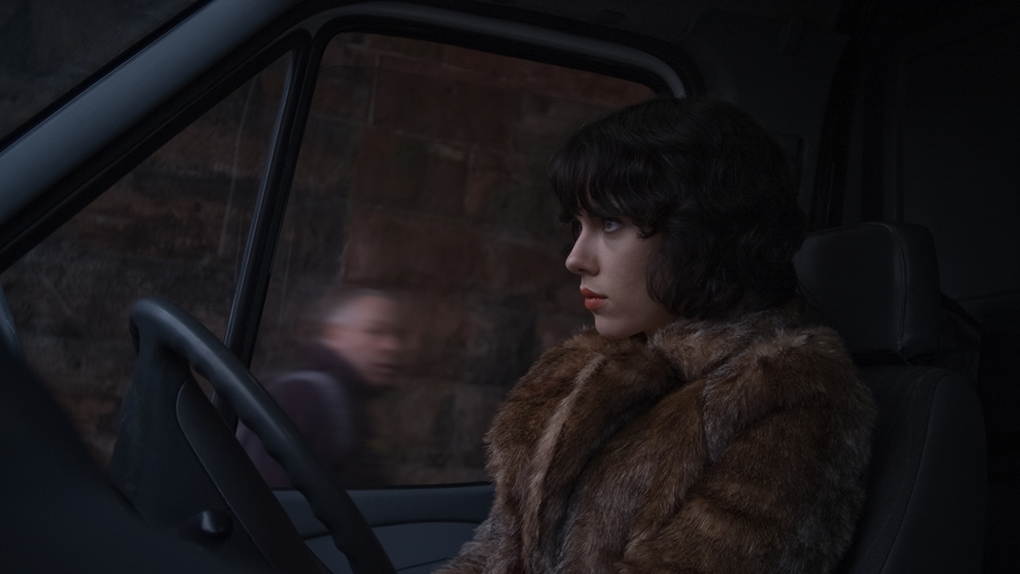
The general feeling that this movie left me with was one of confusion and loneliness. I suppose that was what the story was about - of becoming someone in a world that is foreign, of realizing that power is perhaps a state of mind and, especially for someone who presents as a woman, can be lost in an instant. I thought Scarlett Johanssohn did an amazing job of portraying an alien figure in human skin, who gradually grows into the skin she (?) inhabits. My reading of the ending - in which she is assaulted and burned to death by the man in the woods - was that the alien, in interacting with all these humans in her time, had slowly begun to feel human herself, and gendered as well after she falls for that one nice man, but as soon as she began to embody this human woman fully and lies down to rest, she is molested by a man who had appeared to be nice to her, then molests her in her sleep, tries to rape her, and burns her to death after he is disgusted at her alienness underneath. This seemed to echo the violence committed in our own world against not only women but transgender people especially, by men in hateful reaction to feeling "tricked" and that their masculinity is threatened by their desire.

she know about wearin a fur fox skin

It is interesting to think about the progression of the main character's sexual interactions and the power she loses in parallel. In the beginning of the movie, she seduces unsuspecting men and, in a really cool and eerie sequence, traps them in suspension. They move toward her as she backs away, mirroring her undress, and do not even notice as they descend straight down into the abyss. So chilling! The music during these sequences was terrifying and I loved it. In this section, she has full control over her prey but in a way, exacts her violence in a most non-violent way. She never touches the men - they willingly walk down into the depths, and are broken down seemingly painlessly. After she runs away from her duties and is helped by the nice man, she seems to experience her first instance of human affection and desire. She jumps up right before (?) they have sex and curiously examines her genitals, as if in disbelief that they are there and to realize what they are for. The man never pressures her to do anything, so in this instance she seems to have yielded some of her sexual power over man by sharing desire with someone else, but nevertheless maintains the rightful autonomy any person should have. Everything changes in the third section, however, when the man in the woods tries to rape her. Here, she lost complete control over her body and sexuality, and only manages to escape from underneath him because he is shocked when he tears a piece of her skin, revealing an amorphous substance underneath. The fact that he kills her suggests an unfortunate truth of the world - that a woman who does not submit to the will of man faces great danger. Her death can be read in different ways - Is it justice for the men she killed? A twisted way for her to escape the suffering she experiences as a human woman? Her inevitable fate in taking on the skin of a woman? Tl;dr, alien goes from being sexually powerful to powerless and then goes out in flames. This shit is bonkers.

Interesting facts: Many of the scenes in which she talks to men on the street were filmed with hidden cameras! The disfigured man in the movie is played by Adam Pearson who has neurofibromatosis, and he actually advised them on how she should interact with him. In an op-ed he wrote on Daily Mail, he talked about the importance of positive representations of people with "disfigurements" - scars, burns, things people associate with villains - in popular culture, and to perhaps have real people with these conditions play them instead of having the disfigurement be a costume. He likens this to blackface - not sure how I feel about this so I would love to hear any thoughts. I would have to think some more about how I feel about the relationship between the protag and this character because there seems to be a lot going on. 

Overall the film did a great job of producing an unsettling tone with a classic high-pitched violin set against a low beating bass, mysterious shots with little dialogue and a lot of quiet, and Scarlet's fantastic performance. I can see why this film didn't do so well at the box office - it is very much a film better appreciated at home by someone who is ready to patiently consume something bizarre and beautiful. 

Tuesday, August 8, 2017

thelma & louise (1991)

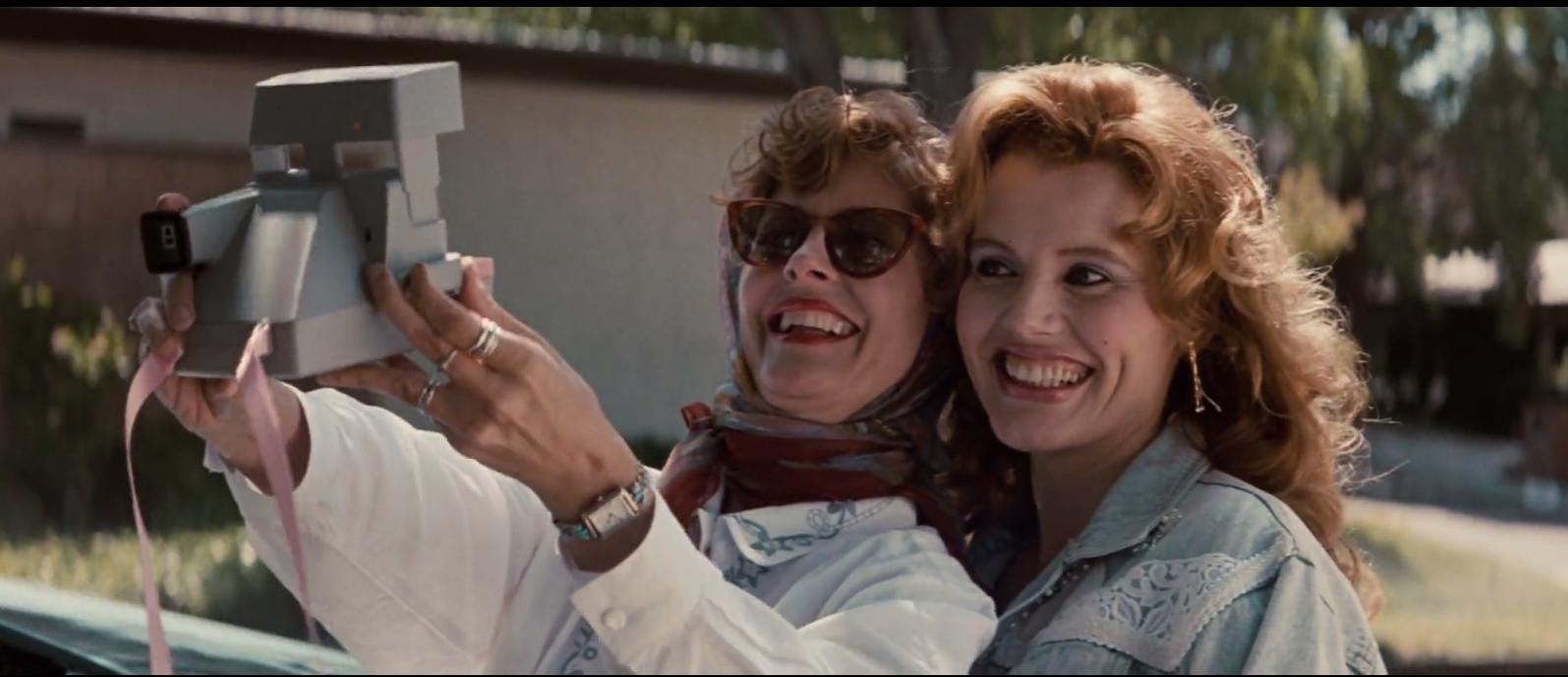
The charm of this film came from simply watching how much fun the two title characters were having, both as a result of leaving behind the things and people that burden them and of defying the law and exacting a kind of violent justice on the men they encounter and are hurt by. Wiki says that this violence has been criticized as senseless and sensationalizing; however, to me their choice of men to exact revenge on made sense - the rapist for obvious reasons, the police officer who represents a criminal justice system that consistently fails victims of sexual assault, and the lewd truck driver who harasses them and is representative of a more seemingly benign (they initially thought he was being nice) but still very violent manifestation of rape culture. Watching them blow up his truck and expertly driving circles around him was especially satisfying. Also Thelma is so derpy and hilarious!

but first let them take a selfie

I thought the ending was really well done! The two friends deciding to commit suicide together could have easily been seen as a cheesy cop-out (no pun intended), but their decision made sense not because they had nothing to live for (they did - at least Louise loved someone), but perhaps because now that they have experienced the satisfaction of freedom and power, they sure aren't going to give it up. Their decision to end their lives together in the face of a squadron of police armed with machine guns is a big middle finger to the the institutions - of both of men and law enforcement - that have harmed them. Interestingly, the one cop who is sympathetic to the women and wants to help them is ignored by the rest of the police, as if the film is saying we know #notallmen but like #mostofthem?? Oppressive institutions exist beyond and despite the individual Good Guy, and even the most sincere promises are not enough to overcome a lifetime of hurt and mistrust.

A detail that I liked: Thelma or Louise looking up and meeting the gaze of someone (usually a man) who has been staring at her. This happened three times I think, where the camera cuts from her looking up and lingers for several seconds on the stranger's unchanging gaze, then cuts back to her reaction. I saw these sequences as an inversion of the male gaze, because you can feel her frustration or defiance, the complexity of her awareness that she is being watched. She is seen but she sees them right back.